
Vehicle Overview
FSRA vehicles through the years
A comparative view of canonical FSRA vehicles since 2012, with compact technical data and direct access to each season car.
Vehicle development
From concept to competition
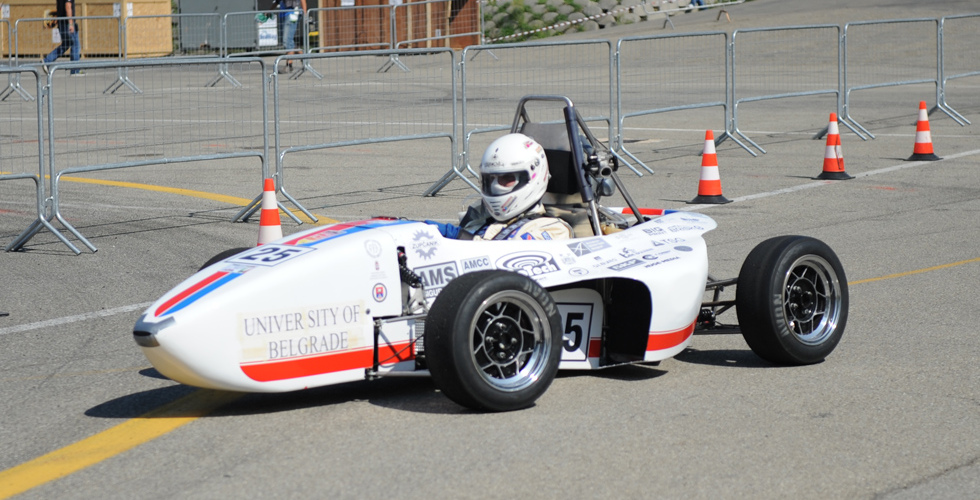
Every Road Arrow car is the result of student-led design, manufacturing, testing, and business planning. The vehicle archive shows how each generation pushed the team forward.
01 / Engineering
Designing the complete race car
The first version of every Road Arrow car exists as a complete engineering concept before it reaches the workshop. Chassis, suspension, steering, braking, powertrain, cooling, aero surfaces and cockpit ergonomics are developed as one connected vehicle system.
Every part must work within Formula Student regulations, packaging limits and performance targets. That pressure forces the team to make clear engineering decisions instead of isolated component choices.
02 / Manufacturing
From CAD to manufactured parts
Only selected components are bought directly. Most of the car is designed by students and manufactured in the workshop, university labs or together with long-term industry partners.
Composite parts, 3D-printed components and machined assemblies are validated against weight, stiffness, durability and serviceability targets before the car reaches final assembly.
03 / Business
Cost, market and production thinking
Formula Student is not only about building a fast prototype. Each vehicle is also evaluated through cost reports, production assumptions and a business case that explains how the concept could exist beyond the workshop.
The team connects engineering decisions with material cost, manufacturing effort, assembly logic and market positioning to build a more complete vehicle proposal.
04 / Validation
Testing, telemetry and race preparation
After assembly, the car is tested on track until weak points become visible. Drivers, engineers and telemetry data work together to refine setup, reliability and handling balance.
Each run creates feedback. Suspension settings, cooling behavior, braking response, sensor data and driver comments are reviewed until the car reaches a competition-ready state.